 My Hydro Garden
2026-07-08
Wall Garden Watering Methods Compared
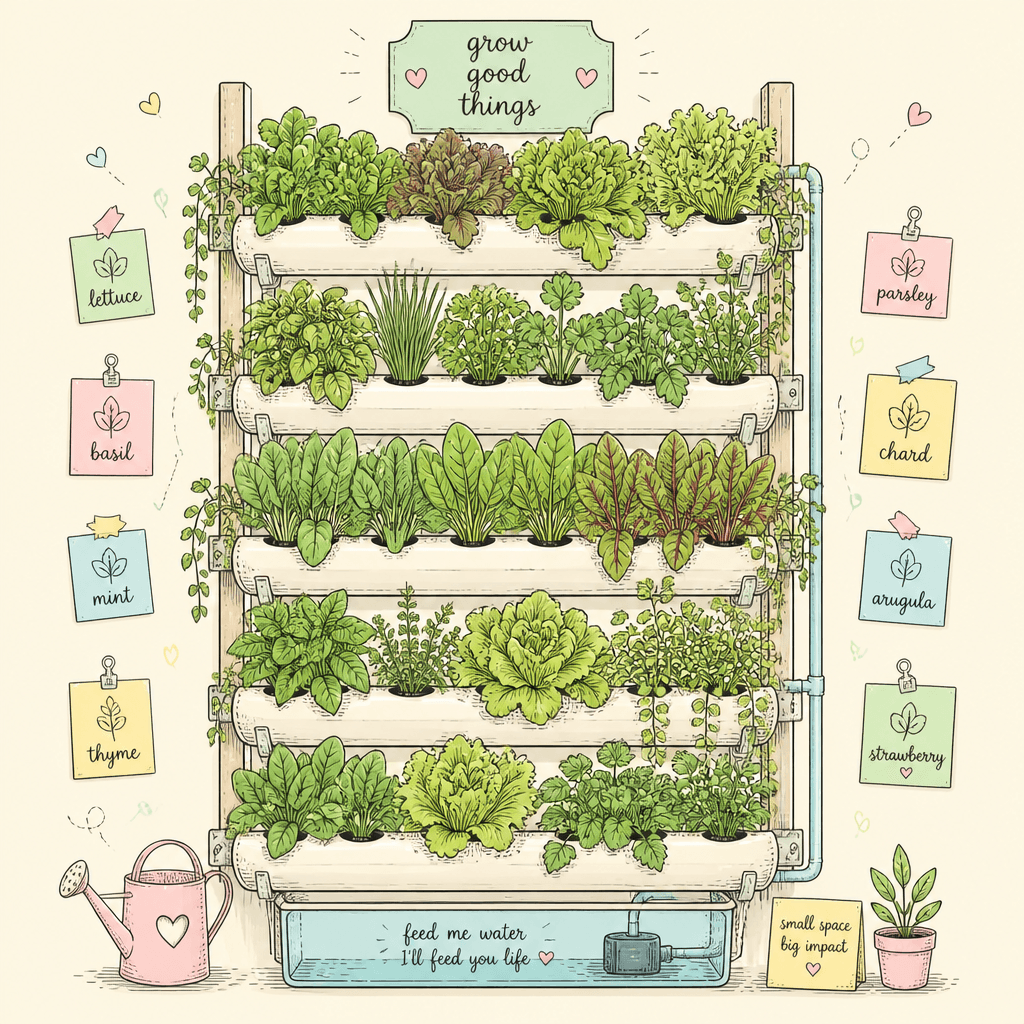
The biggest maintenance decision with a wall garden isn't what you plant — it's how it gets watered. Here's how the three common methods compare.
Drip irrigation delivers water directly to each plant's roots through small tubes and emitters. It reduces water waste and evaporation, can cut water use by up to 80% compared to overhead watering, and keeps foliage dry, which helps avoid the fungal issues that come from wetting leaves. It works best when the wall has access to a water line and a timer, which makes it more common outdoors.
Self-watering reservoirs are built into the planter itself, letting the soil draw water as needed instead of relying on a schedule. A reservoir can keep plants watered for up to two weeks, depending on climate and species, and some panel systems trickle water down through tiers automatically. This is the better fit for indoor walls without any plumbing nearby.
Manual watering needs no hardware at all, which makes it the easiest way to start. But it doesn't scale well — keeping water even across a wall of a dozen or more pockets by hand gets time-consuming and inconsistent fast.
As a rule of thumb: an outdoor wall near a water source suits drip irrigation, an indoor wall or a rental suits a self-watering reservoir planter, and a small trial pocket panel is fine to water by hand while you get started. See our Wall Gardens category for systems built around each approach.