 My Hydro Garden
2026-07-15
Hydroponic Nutrients for Beginners
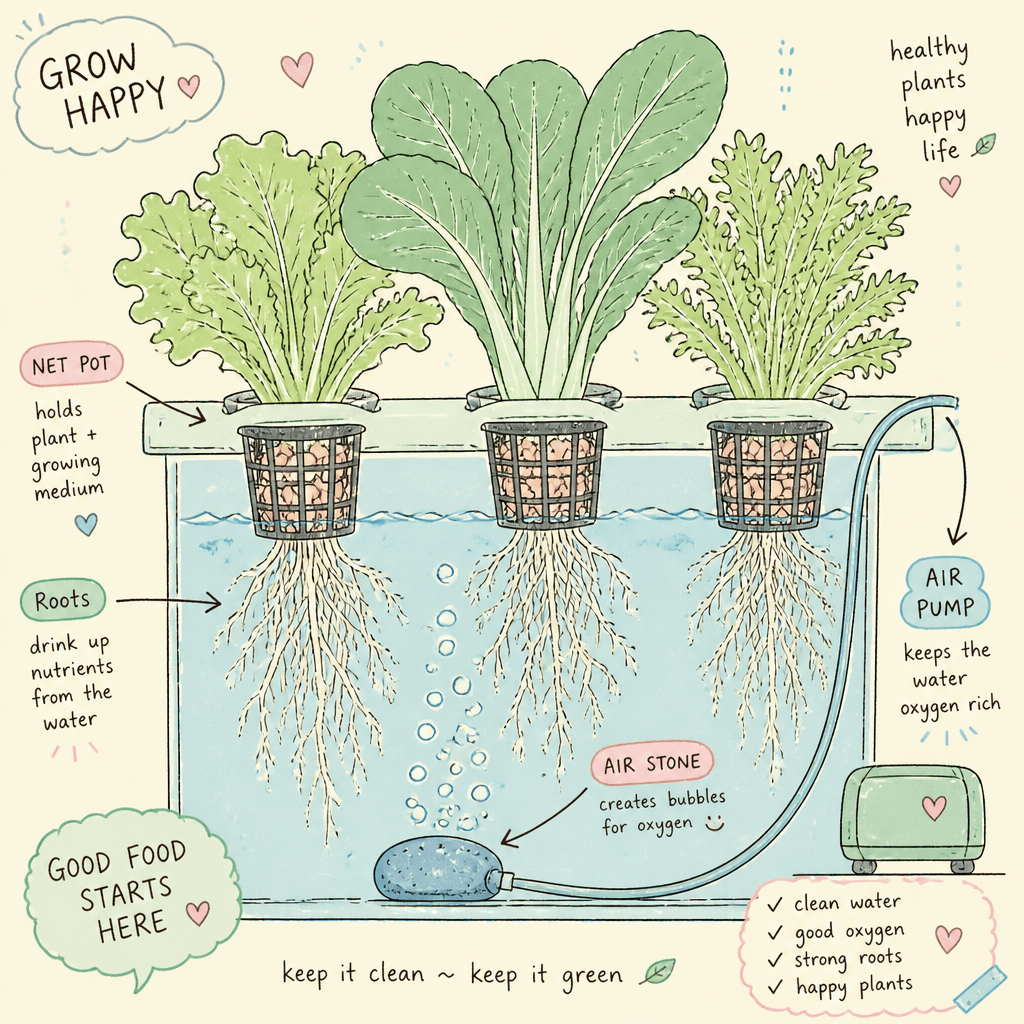
Growing without soil means the nutrient solution does the job soil normally would. Here's the minimum you need to know before your first grow.
Every bottle of base nutrient shows three numbers, like 10-5-5 — the N-P-K ratio. Nitrogen (N) drives leafy, green growth. Phosphorus (P) supports root development and flowering or fruiting. Potassium (K) regulates water uptake and strengthens the plant against disease.
Beyond N-P-K, plants also need smaller amounts of calcium, magnesium, and sulfur, plus trace amounts of iron, manganese, zinc, and boron. Most complete, pre-mixed hydroponic nutrient formulas already include these, so as a beginner you don't need to dose them separately.
pH measures how acidic or basic the solution is, and it acts as a gatekeeper for nutrient uptake — most plants want it between 5.8 and 6.5. Outside that range, plants can struggle to absorb nutrients even when they're present in the water.
EC (electrical conductivity) measures how concentrated the nutrient solution is, in units like mS/cm, and it's typically increased gradually as plants mature. Most all-in-one countertop kits manage this automatically, but it's worth understanding if you're running a DIY setup.
For a first grow: start with a complete, pre-mixed hydroponic nutrient formula rather than mixing individual nutrients yourself, check pH after mixing, and don't worry about an EC meter until you're past your first grow or two.